
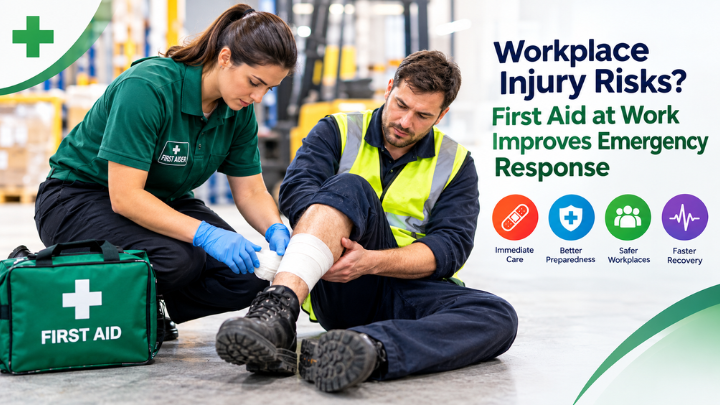
Workplace injuries and sudden illness can occur in any UK workplace, from offices and retail settings to warehouses and construction sites. Effective first-aid arrangements help provide immediate assistance while professional medical support is being arranged. Employers should assess their workplace risks and workforce needs to determine suitable provision. First Aid at Work (FAW) training can prepare selected employees with the practical knowledge needed to respond appropriately to a wider range of workplace injuries and illnesses.
1. Workplace Injury Risks and the Importance of Immediate First Aid
Workplace injuries and sudden illnesses can occur in any UK workplace, with risks varying according to the type of work and working environment. Cuts, burns, falls, fractures, bleeding, choking and sudden illness may require immediate attention before professional medical help arrives. Having trained first-aiders available can help employees receive appropriate initial assistance and support a more organised emergency response. Employers should therefore consider their workplace hazards, workforce, working patterns and previous incidents when establishing suitable first-aid arrangements.
Common Workplace Injuries and Emergencies: Workplace incidents can vary depending on the type of work and environment. Employees may experience cuts, burns, falls, fractures, bleeding, choking, fainting or sudden illness. Some incidents can become serious quickly and require appropriate first aid before professional medical assistance arrives.
How Workplace Risks Affect First-Aid Needs: First-aid requirements depend on factors such as workplace hazards, equipment, substances, working conditions, workforce size and previous accident history. A warehouse may have different needs from an office, while construction and other higher-risk environments may require more comprehensive arrangements.
Why Trained First-Aiders Matter: A first-aid kit alone may not be enough during an emergency. Employees also need access to suitably trained people who understand how to respond within the limits of their competence. Prompt and appropriate assistance can help manage an incident while further medical support is being arranged.
How a First-Aid Needs Assessment Identifies Requirements: A first-aid needs assessment helps employers consider hazards, employee numbers, shift patterns, lone workers, absences, accident history and access to emergency medical services. Arrangements should be reviewed when workplace conditions, staffing, working hours or risks change. There is no universal number of first-aiders for every business; provision should reflect the specific needs and risks of the workplace.
2. How First Aid at Work Training Improves Emergency Response
First Aid at Work (FAW) training helps selected employees develop the knowledge and practical skills needed to respond to a wider range of workplace injuries and illnesses. Trained first-aiders can provide appropriate initial assistance, recognise when emergency medical help may be needed and support a more organised response until professional help arrives. This training can therefore strengthen workplace emergency preparedness and help employees respond more confidently when unexpected incidents occur.
FAW Training and Workplace Emergency Skills: First Aid at Work (FAW) training provides broader workplace first-aid knowledge than Emergency First Aid at Work (EFAW). It prepares selected employees to respond to a wider range of workplace injuries and illnesses where a risk assessment identifies the need for more comprehensive first-aid provision.
The Role of Trained Workplace First-Aiders: Trained first-aiders can provide appropriate initial assistance, recognise when emergency medical help may be required and support the situation until professional help arrives. Practical training also helps participants develop confidence in responding calmly and appropriately to workplace emergencies.
Maintaining First-Aid Skills and Competence: FAW certificates are normally valid for three years, while the HSE recommends annual refresher training to help first-aiders maintain their skills. Employers should consider appropriate refresher training and requalification as part of their ongoing workplace first-aid arrangements.
Creating Effective Workplace First-Aid Arrangements: Effective first aid requires more than trained personnel. Employees should know who the first-aiders are and how to contact them, while suitable equipment, facilities and clear emergency procedures should remain accessible. Employers should also check a training provider’s competence and suitability rather than assuming that the HSE approves individual providers.
3. Strengthening Workplace Emergency Preparedness With First Aid Training
First-aid training can strengthen workplace emergency preparedness by ensuring that suitable employees have the knowledge to respond appropriately to injuries and sudden illness. When combined with accessible first-aid equipment, clear emergency procedures, trained personnel and regular risk assessments, it can help UK businesses create a more organised and responsive workplace safety system.
First Aid as Part of Workplace Safety: First-aid training should form part of a wider workplace health and safety approach. Effective emergency preparedness combines trained personnel, suitable equipment, clear procedures and employee awareness to support an appropriate response when an injury or sudden illness occurs.
Reviewing Workplace First-Aid Arrangements: Employers can use accident records, near-miss information and updated risk assessments to check whether their first-aid arrangements remain suitable. Changes such as new equipment, working processes, staffing levels or workplace hazards may require arrangements to be reviewed.
Preparing for Different Working Environments: First-aid needs can vary for travelling workers, lone workers, remote locations and shared workplaces. Employers should consider the work location, number of people present, access to medical assistance and specific risks when planning appropriate first-aid provision.
Building a More Prepared Workplace: Accessible first-aid equipment, trained personnel, clear emergency contacts and employee awareness can work together to strengthen emergency preparedness. Suitable First Aid at Work training can help selected employees respond responsibly within the scope of their training when workplace incidents occur.
Conclusion
Identifying workplace injury risks and carrying out an appropriate first-aid needs assessment can help UK employers establish effective emergency arrangements. First Aid at Work training can equip suitable employees with broader skills to respond to workplace injuries and illness. However, effective preparedness requires more than a first-aid kit; trained people, suitable facilities, clear procedures and regular reviews all play an important role. Employers should regularly review their first-aid needs and choose training that reflects the risks identified in their workplace.