
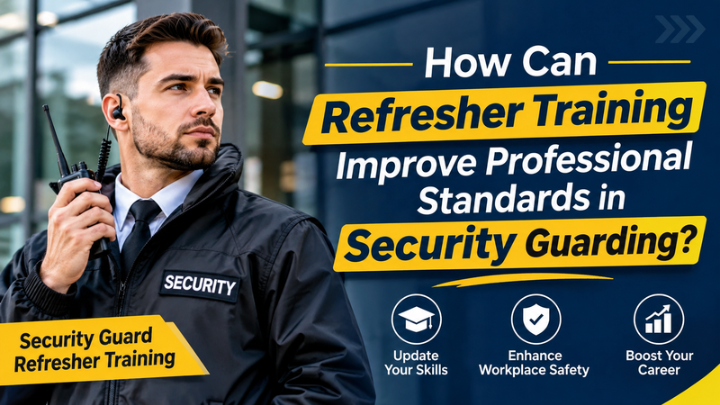
Professional standards are essential in the UK security industry. Security guards must maintain their knowledge, communication skills and awareness of workplace risks. Security Guard Refresher Training helps professionals update their skills, understand current requirements and perform their responsibilities effectively.
1. Strengthening Professional Skills Through Refresher Training
Security guards perform different responsibilities depending on their workplace. These include monitoring premises, controlling access, observing suspicious activities and responding to incidents.
These duties require practical knowledge, good judgement and professional communication. Refresher training allows security professionals to review their existing knowledge and improve the skills needed for their daily responsibilities.
Essential Skills Reinforced Through Training
Conflict Management and De-escalation
Security guards may encounter disagreements, aggressive behaviour or difficult customers. Refresher training reinforces calm communication, active listening and verbal de-escalation techniques.
These skills help professionals manage challenging interactions without creating unnecessary confrontation.
Effective Communication and Customer Service
Clear communication is important when dealing with visitors, employees, customers and management.
Security guards need to provide accurate information, explain workplace procedures and communicate concerns professionally. Good communication also helps build trust and maintain a respectful working environment.
Observation and Risk Awareness
Monitoring surroundings and recognising unusual activities are important parts of security work.
Refresher training helps guards maintain awareness of potential risks and understand when further investigation or reporting may be necessary.
Emergency Response and Incident Reporting
Security personnel should understand workplace emergency procedures and know how to respond within their training and responsibilities.
This includes reporting incidents, recording relevant information and contacting emergency services when required.
2. Updated Security Knowledge and Workplace Safety
Security environments can change depending on workplace activities, customer behaviour and potential threats.
Guards working in shopping centres, offices, construction sites and public spaces may face different security challenges.
Updated knowledge helps professionals understand these risks, follow appropriate procedures and make responsible decisions during unexpected incidents.
Current Security Procedures and Legal Responsibilities
Security guards must understand their responsibilities and work within relevant UK laws and workplace policies.
Refresher training reinforces important areas of security practice, including:
- Following workplace security procedures.
- Understanding appropriate search procedures.
- Recognising and reporting suspicious activities.
- Protecting people who may be vulnerable.
- Understanding potential terrorism-related threats.
- Maintaining professional conduct when dealing with the public.
Emergency Awareness and Incident Prevention
Being prepared for emergencies is an important part of professional security work.
Security guards should understand how to respond to suspicious packages, unauthorised access, threatening behaviour and medical emergencies.
Training also reinforces the importance of recognising potential dangers before they develop into serious situations.
Accurate Record-Keeping and Incident Reporting
Accurate incident records help employers understand security concerns and review workplace procedures.
Security guards should record relevant details such as:
- Date, time and location of an incident.
- A clear description of the event.
- Actions taken and people notified.
- Relevant witness details, where appropriate.
- Any further action required.
Reports should remain factual, clear and confidential. This supports accountability and helps management identify areas where additional security measures may be needed.
SIA Requirements and Professional Development
The Security Industry Authority (SIA) regulates the private security industry in the UK and sets training requirements for individuals applying for or renewing certain licences.
Since 1 April 2025, security guards renewing their front-line SIA licence must complete the relevant Security Officer Refresher qualification alongside the required existing qualifications.
They must also have a valid Emergency First Aid at Work qualification, or an equivalent certificate, before starting the refresher training.
Key Areas Covered in Security Guard Refresher Training
Searching: Understanding appropriate search procedures and carrying them out professionally.
Terror Threat Awareness: Recognising potential threats and understanding how to report suspicious activities.
Protecting Vulnerable People: Identifying individuals who may be at risk and understanding appropriate safeguarding responses.
Security guards should check the latest SIA guidance before booking training or submitting a licence renewal application.
3. Career Development and Professional Standards in Security Guarding
Professional development is important for security guards who want to maintain their skills and continue working in the private security industry.
Refresher training helps individuals review their knowledge, understand current industry expectations and improve their approach to daily responsibilities.
Confidence and Workplace Performance
Updated training can help security guards feel more prepared when dealing with different workplace situations.
For example, a guard working in a retail environment may need to manage customer concerns, monitor suspicious behaviour and report incidents to management.
Someone working on a construction site may focus more on access control, site security and preventing unauthorised entry.
Important Skills for Professional Performance
- Making responsible decisions.
- Communicating professionally.
- Following workplace procedures.
- Recognising potential security risks.
- Working effectively with colleagues.
Adapting to Different Security Environments
Security professionals may work across several industries throughout their careers. Each environment has different responsibilities and potential risks.
Common Security Working Environments
Retail and Shopping Centres: Monitoring customer activity, preventing theft and managing security concerns.
Office Buildings: Controlling access, monitoring visitors and protecting workplace facilities.
Construction Sites: Preventing unauthorised entry, monitoring equipment and maintaining site security.
Events and Public Spaces: Observing crowd behaviour, identifying potential risks and reporting incidents.
Employer Benefits and Continued Professional Development
Employers benefit from security personnel who understand their responsibilities and follow established procedures.
Well-trained guards can contribute to better communication, consistent incident reporting and improved awareness of workplace risks.
For individuals planning to continue their careers, professional development can support long-term learning and help them adapt to changing industry expectations.
Corby Training Centre provides training opportunities for individuals interested in developing their security knowledge and maintaining relevant professional qualifications.
Conclusion
Security Guard Refresher Training helps professionals maintain their knowledge, improve workplace awareness and meet relevant SIA licence renewal requirements.It reinforces important skills such as searching, recognising security threats and protecting vulnerable people.
Keeping qualifications and knowledge up to date supports responsible working practices and continued career development. Security professionals can explore relevant refresher training at Corby Training Centre to maintain professional standards in the UK security industry.