
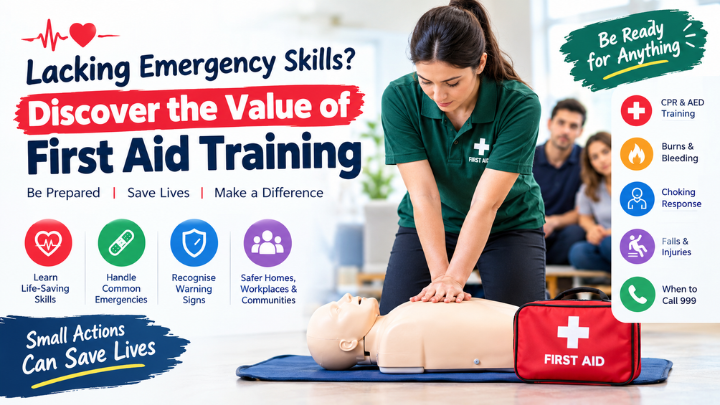
Emergencies can happen anywhere, and knowing how to respond can help people provide appropriate assistance while waiting for medical help. First Aid Training develops practical emergency skills and helps individuals recognize potential dangers. In the UK, employers must provide adequate and appropriate first aid arrangements under the Health and Safety (First-Aid) Regulations 1981, making suitable training important for workplace preparedness.
1. Why Is First Aid Training Important in Everyday Emergencies
First Aid Training helps people respond appropriately when someone is injured or suddenly unwell. It develops practical skills to manage common emergencies, recognize serious warning signs, and provide suitable assistance while waiting for professional medical help. Whether at home, at work, or in public places, knowing basic first aid can help people act more confidently and avoid unsafe responses. These skills are valuable for everyone, not just healthcare professionals, although first aid training does not replace professional medical care.
First Aid Training in Common Emergencies
First Aid Training helps people understand how to respond appropriately when someone is injured or suddenly becomes unwell. During an emergency, knowing what to do while waiting for professional medical assistance can help manage the situation and reduce the risk of further harm. These practical skills are useful in workplaces, schools, public spaces, and homes, where accidents and unexpected medical situations can happen without warning.
Common emergencies include bleeding, burns, falls, choking, and sudden illness. First aid training teaches learners how to recognize these situations, assess potential dangers, and provide suitable assistance within their level of training. For example, applying appropriate pressure to a bleeding wound, cooling a minor burn safely, or recognizing signs of a serious medical problem can be important initial steps. Knowing when to seek professional help is equally important. Although first aid cannot replace medical treatment, it can help people respond more confidently and responsibly until further assistance arrives.
Recognizing Serious Warning Signs and Calling 999
Recognizing serious warning signs is an essential part of First Aid Training. Some medical emergencies require immediate professional attention, and delays in seeking help can increase the risk of serious harm. Learners develop an understanding of situations that may require urgent assistance, such as when someone becomes unresponsive, is not breathing normally, experiences severe bleeding, or shows signs of a life-threatening condition. In the UK, calling 999 is appropriate when an emergency requires an ambulance.
Training also helps learners assess the surrounding environment before approaching an injured or unwell person. They learn to look for hazards, such as traffic, fire, electrical risks, or dangerous equipment, that could put themselves or others at risk. If the scene is unsafe, they should avoid entering the danger area and seek appropriate help. When it is safe to assist, following their training and the emergency call handler’s instructions can help them take suitable action while waiting for emergency services. Understanding these limits is important because the priority is to protect everyone involved and obtain professional medical assistance when needed.
Who Can Benefit from First Aid Training
First Aid Training is not only useful for healthcare professionals. Employees, parents, corers, teachers, childcare workers, sports coaches, and members of the public can all benefit from learning how to respond appropriately to emergencies. These skills can be valuable in everyday situations, whether someone becomes unwell at home, sustains an injury at work, or needs assistance in a public place. The type of training required may vary depending on a person’s responsibilities, workplace risks, and individual needs.
For employers, suitable first aid training can help staff understand workplace emergency procedures and respond appropriately when an incident occurs. Parents and corers may find these skills useful when looking after children, older adults, or people who need additional support. Members of the public can also develop a better understanding of how to recognize emergencies and when to contact professional services. However, first aid training does not replace professional medical care or guarantee a particular outcome. Its purpose is to help learners make informed decisions, provide appropriate assistance within their level of competence, and seek further help when necessary.
2. What Skills Can You Develop Through First Aid Training
First Aid Training helps learners develop practical skills to respond to injuries and sudden illnesses at work or in everyday situations. The skills covered depend on the course, but the aim is to help participants recognize emergencies, take appropriate action, and understand when professional medical assistance is needed.
Essential First Aid Skills for Real-Life Situations
Practical first aid courses teach learners how to assess an emergency scene, check whether a person is responsive and breathing normally, and respond appropriately to injuries such as severe bleeding and burns.
Depending on the course, training may include cardiopulmonary resuscitation (CPR) and the use of an automated external defibrillator (AED). These skills help learners understand how to respond when someone experiences a suspected cardiac arrest while waiting for emergency services.
Practical exercises and instructor feedback are important parts of effective training. They allow participants to practice techniques, correct mistakes, and understand the limits of their knowledge. Learners should also follow current UK first aid guidance and seek professional assistance when necessary. As course content varies, it is important to check which skills are covered before enrolling.
Choosing the Right First Aid Course in the UK
Choosing an appropriate course depends on individual responsibilities, workplace risks, and the level of training required. In the UK, common workplace options include Emergency First Aid at Work (EFAW) and First Aid at Work (FAW).
EFAW generally provides training in essential emergency first aid, while FAW covers a broader range of workplace injuries and illnesses. Workplace first aid awareness courses may also help employees understand basic emergency procedures, although they may not qualify participants to act as designated workplace first aiders.
Employers should assess workplace hazards, the number of employees, work patterns, and the availability of emergency assistance when determining their first aid arrangements. Individuals should check course prerequisites, practical assessments, certificate validity, and refresher requirements before booking.
It is equally important to verify the training provider’s credibility, instructor competence, and whether the course meets relevant UK workplace requirements. Selecting suitable First Aid Training helps learners develop skills that match their responsibilities and prepare more effectively for potential emergencies.
3. How Can First Aid Training Benefit Employees and Employers
First aid training helps employees and employers to prepare for unforeseen workplace emergencies by raising awareness of possible risks and developing practical skills. Injuries can be spotted by trained staff, who can take the correct action and help until professional medical help arrives. Proper training is essential to prepare workers across offices, construction sites, warehouses and hospitality settings. When used alongside suitable risk assessments and safety arrangements, it also assists employers in fulfilling their first aid responsibilities under UK regulations.
First Aid Training for Workplace Preparedness
First Aid Training helps employees develop the practical skills and knowledge needed to respond appropriately to workplace emergencies. It teaches learners how to recognize injuries, identify potential dangers, assess emergency situations, and provide suitable assistance while waiting for professional medical support. These skills can help employees remain calm and make informed decisions during unexpected incidents.
When staff understand basic first aid procedures, they can contribute to a safer and more prepared working environment. Training also helps employees recognize when an injury requires urgent medical attention and when to call 999. Regular training and refresher sessions can help maintain essential knowledge and ensure employees remain familiar with appropriate emergency procedures.
First Aid Training Across Industries
First Aid Training is valuable across different industries because every workplace has its own potential hazards and emergency situations. In offices, employees may encounter falls, minor injuries, or sudden illness. Construction sites and warehouses may involve risks associated with machinery, heavy materials, and workplace accidents. Hospitality businesses may face emergencies involving burns, cuts, choking, or other injuries.
Suitable training helps employees understand how to respond according to their working environment, responsibilities, and level of competence. Employers should identify workplace risks before selecting appropriate courses for their staff. For example, employees working in higher-risk environments may require broader first aid training than those working in lower-risk office settings. Providing relevant training can improve emergency preparedness and help staff understand how to seek professional assistance when necessary.
UK Employers’ First Aid Responsibilities
In the UK, the Health and Safety (First-Aid) Regulations 1981 require employers to provide adequate and appropriate first aid equipment, facilities, and personnel according to their workplace circumstances. Employers should assess workplace hazards, employee numbers, work activities, and other relevant factors when deciding which first aid arrangements are necessary. These assessments help determine whether employees need designated workplace first aiders and which training courses are suitable.
However, first aid training alone cannot prevent every workplace accident or guarantee a particular outcome. Employers must also maintain appropriate risk assessments, emergency procedures, safety equipment, and other preventive measures. They should review their first aid arrangements when staffing levels, workplace hazards, working practices, or business operations change significantly. Keeping training records and monitoring certificate expiry dates can also help employers maintain suitable arrangements and identify when refresher training is needed.
First Aid Skills Beyond the Workplace
First aid skills are useful beyond working hours and can help individuals respond appropriately to emergencies involving family members, friends, or members of the public. For example, knowing how to recognize serious warning signs, respond to bleeding, or identify when someone needs urgent medical attention can be valuable at home or in public places. These skills can also help people understand when to contact emergency services rather than attempting to manage a serious condition themselves.
First Aid Training gives learners an opportunity to practice essential techniques and understand the limits of their knowledge. Although training does not replace professional medical care, it can help individuals make informed decisions and provide suitable assistance until further help arrives. By developing these practical skills, people can improve their personal preparedness and become better equipped to respond responsibly to unexpected emergencies in everyday life.
Conclusion
First Aid Training helps individuals develop practical skills to respond to emergencies and recognise when professional medical assistance is needed. Choosing the right course based on personal needs, workplace responsibilities, and UK requirements is important. Explore the available courses at Corby Training Centre and enquire about suitable training options to find a course that meets your needs.