
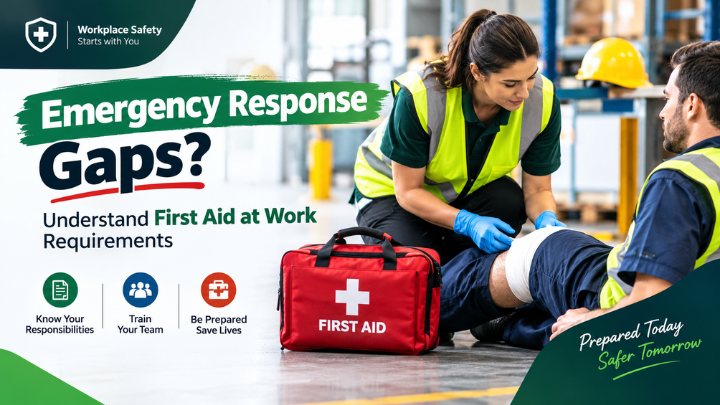
Workplace emergencies can occur unexpectedly, from minor injuries to serious medical conditions. Understanding First Aid at Work Requirements helps UK employers provide suitable equipment, trained personnel, and clear emergency procedures. This article explains employer responsibilities, how to identify first aid gaps, and how appropriate training can improve workplace safety and emergency preparedness.
1. What Are the First Aid at Work Requirements for UK Employers
Understanding First Aid at Work Requirements helps UK employers provide suitable workplace safety arrangements. From assessing potential hazards to ensuring access to first aid equipment and trained personnel, employers must make sure employees can receive appropriate assistance during an emergency. Following the UK Health and Safety Executive’s first aid at work guidance can help businesses understand their responsibilities and maintain effective first aid provision.
Understanding UK First Aid Regulations
The Health and Safety (First-Aid) Regulations 1981 require employers in Great Britain to provide adequate and appropriate first aid arrangements for their employees. These arrangements should reflect workplace risks and ensure assistance is available when someone becomes injured or unwell. An office, warehouse, construction site, and manufacturing facility may each require different first aid arrangements.
Why Is a First Aid Needs Assessment Important
A first aid needs assessment helps employers determine the appropriate number of trained first-aiders, the equipment required, and whether additional facilities or arrangements are necessary. There is no single legal number of first-aiders for every workplace; provision should depend on the assessment and specific working conditions.
First Aid Equipment and Employee Information
Employers should ensure that first aid kits are suitably stocked and accessible. Depending on workplace needs, additional equipment or facilities may be necessary. Employees should know where first aid supplies are located, who the designated first-aiders are, and how to request assistance during an emergency.
Appointed Person vs Trained First-Aider
An appointed person manages first aid arrangements, maintains supplies, and contacts emergency services when needed. This role does not automatically qualify someone to administer first aid. A trained first-aider has completed appropriate training and can provide assistance within the scope of their skills.
Employers should also review their arrangements whenever circumstances change. New machinery, increased staffing, different shift patterns, additional premises, or changes in workplace hazards may affect first aid needs. Regular reviews help identify weaknesses and maintain suitable arrangements for employees and their working environment.
2. How Can You Identify and Close Workplace First Aid Gaps
Identifying workplace first aid gaps helps employers recognise weaknesses in emergency arrangements before an incident occurs. By assessing workplace hazards, checking first aid supplies, reviewing staff training, and ensuring first-aiders are available when needed, businesses can improve their emergency preparedness. Regular assessments and well-defined emergency procedures help employees access first aid promptly and handle workplace emergencies more effectively.
Conduct a Workplace First Aid Needs Assessment
Identifying gaps in workplace first aid arrangements helps employers understand whether employees can access appropriate assistance during an emergency. A first aid needs assessment provides a practical starting point by examining workplace hazards, the likelihood of injuries, and the level of support required.
Activities involving machinery, hazardous substances, manual handling, or work at height may create additional risks. Employers should review previous accidents and near misses to identify recurring problems. The number of employees, shift patterns, lone working arrangements, remote locations, site accessibility, and distance from emergency medical services can also influence first aid provision. Businesses should consider visitors, contractors, and members of the public who may need assistance.
Identify and Address Common First Aid Gaps
Common gaps include first-aiders being unavailable during night shifts, expired training certificates, poorly stocked first aid kits, and unclear emergency procedures. Employees may also be unsure who to contact or where to find essential equipment.
Employers can address these issues by inspecting first aid supplies regularly, maintaining accurate training records, arranging cover for staff absences, displaying clear contact information, and reviewing emergency procedures when workplace conditions change. Planning should also recognise relevant mental health needs and ensure staff know how to access appropriate support when someone experiences distress.
Build a Reliable Workplace Emergency Response Plan
A reliable emergency response plan identifies who is responsible for coordinating assistance, how first-aiders can be contacted, and when emergency services should be called. Employees should know where first aid equipment is located, how to raise the alarm, and how to guide emergency responders to the correct location.
Practising realistic workplace scenarios can reveal communication problems, confusion about responsibilities, and delays in accessing equipment. Employers can use these exercises to improve procedures and ensure staff understand their roles. First-aiders should act within the limits of their training and seek professional assistance when necessary. In a serious or life-threatening situation, call 999 promptly and follow the emergency call handler’s instructions.
Regular reviews, clear communication, and practical preparation help businesses identify weaknesses before an incident occurs and maintain a more organised emergency response.
3. Which First Aid Training Meets Your Workplace Needs
Choosing the right first aid training helps employers prepare staff to respond to workplace emergencies effectively. The appropriate course depends on workplace risks, the findings of the first aid needs assessment, and the responsibilities assigned to employees. Understanding the differences between EFAW and FAW qualifications can help businesses select suitable training and maintain effective workplace first aid arrangements.
Understand the Main Workplace First Aid Courses
Choosing suitable first aid training is an important part of preparing employees to respond to workplace emergencies. The right course depends on the employer’s first aid needs assessment, workplace hazards, and the responsibilities assigned to staff. Employers should consider the type of work being carried out, the potential severity of injuries, and the level of first aid support required.
In the UK, two common workplace first aid qualifications are Emergency First Aid at Work (EFAW) and First Aid at Work (FAW). EFAW focuses on immediate assistance during workplace emergencies, while FAW covers emergency first aid and a broader range of injuries and illnesses. The appropriate option depends on the level of provision identified by the workplace assessment.
Certain workplaces may need extra or specialised training to address specific risks and safety challenges. Employers should ensure that any extra training addresses the risks identified rather than assuming a standard course will cover every situation.
Check Certificate Validity and Practical Skills
EFAW and FAW certificates generally remain valid for three years. The Health and Safety Executive (HSE) recommends annual refresher training to help first-aiders maintain their knowledge and practical skills. Employers should monitor certificate expiry dates and plan refresher or requalification training in advance to avoid gaps in workplace provision.
Depending on the course syllabus, practical training may cover CPR, assisting an unresponsive casualty, controlling bleeding, and recognising when emergency services are needed. These skills should be practised and assessed so learners understand how to apply them within the limits of their training.
Before enrolling, employers and individuals can explore relevant training options at Corby Training Centre. They should confirm the course content, assessment requirements, certificate arrangements, and suitability for the intended workplace role.
How to Choose the Right First Aid Training Provider
Start by reviewing the workplace needs assessment to establish whether EFAW, FAW, or additional training is appropriate. Then check the course duration, practical assessment methods, certificate validity, and requalification arrangements.
It is also important to verify the provider’s competence and ensure the qualification meets the needs of the intended workplace role. Employers should check that the course content aligns with relevant HSE guidance and their workplace arrangements.
Finally, consider how training fits into ongoing safety planning. Maintaining qualification records, monitoring expiry dates, and arranging cover when first-aiders are absent can help maintain consistent provision. No single course automatically meets every workplace’s needs; the final decision should reflect the risks, staffing arrangements, and requirements identified by the employer.
Conclusion
Meeting First Aid at Work Requirements involves proper planning, accessible equipment, clear responsibilities, and suitable training. Employers should regularly review their first aid needs assessment to identify gaps and ensure employees know how to access assistance during an emergency. Choosing appropriate training can help businesses maintain workplace safety and improve emergency preparedness. Explore suitable first aid training options at Corby Training Centre to support your workplace needs.