
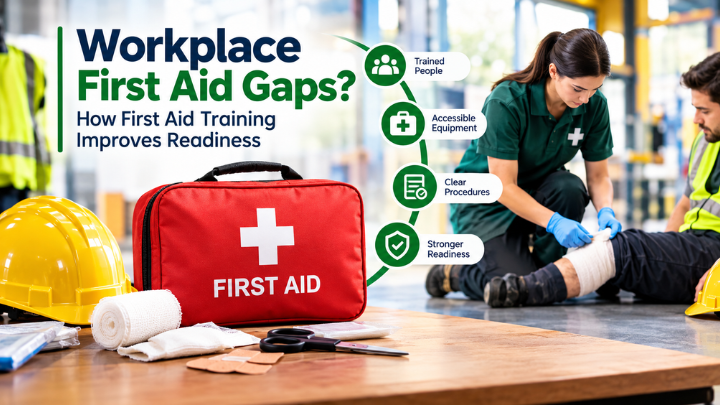
Workplace first aid readiness is important for UK businesses across offices, retail environments, construction sites, hospitality venues and other workplaces where employees may face different health and safety risks. However, gaps can occur when there are too few trained first aiders, unclear emergency procedures, limited cover during holidays or shifts, or employees who do not know where first aid equipment is located. Effective first aid arrangements should be based on a suitable first-aid needs assessment that considers workplace activities, workforce numbers, risks, working patterns and access to emergency services. Appropriate first aid training can help businesses prepare employees to respond more effectively to workplace incidents while supporting wider health and safety.
1. Common Workplace First Aid Gaps That Can Affect Emergency Readiness
Many UK workplaces have first aid kits and basic emergency procedures but may still have gaps in their overall readiness. A workplace can face difficulties when there are not enough trained first aiders available, particularly during staff holidays, different shifts, lone-working arrangements or unexpected absences. New employees may also be unfamiliar with emergency procedures, while first aid equipment can become difficult to locate, incomplete or poorly maintained. Employees should know who the trained first aiders are, where first aid facilities are located and how to request emergency assistance when an incident occurs.
First aid arrangements should reflect the actual needs and risks of the workplace rather than following the same approach for every organisation. Employers should consider factors such as the type of work, workforce size and distribution, previous incidents, remote or isolated areas, visitors, trainees, working patterns and relevant medical considerations when assessing their first-aid provision. This helps businesses identify where additional training, equipment or emergency procedures may be needed.
Signs Your Workplace May Have First Aid Training Gaps
Several signs can indicate that a workplace needs to review its first aid arrangements:
- Employees cannot quickly identify who the trained first aiders are.
- First aid cover is unclear during different shifts, holidays or staff absences.
- Employees are unsure about what to do while waiting for emergency services.
- First aid equipment is unavailable, incomplete or difficult to access.
- Emergency procedures have not been clearly communicated to staff.
- Staff have limited opportunities to practise or review emergency procedures.
- Training records, certificates and refresher requirements are not being monitored.
- New employees are not properly informed about workplace first aid arrangements.
2. How First Aid Training Improves Workplace Emergency Readiness
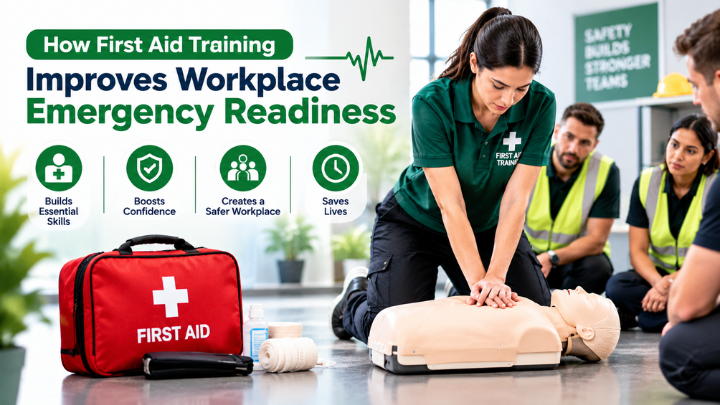
Structured first aid training can help designated employees build the knowledge and practical skills needed to respond properly when a coworker becomes ill or gets hurt at work. The training should match the risks found in the organisation’s first-aid needs assessment. That way employees are ready for situations that could actually happen in their workplace. Trained first aiders can give the initial response while waiting for professional medical help to arrive. This helps make emergencies at work are handled the right way following established procedures.
Effective readiness doesn’t come from training alone. It also depends on emergency procedures, easy access, to first aid equipment, trained staff and dependable communication. These elements must work together as part of the organisation’s safety plan. First aid training supports these efforts. Does not take the place of risk assessment, accident prevention or emergency planning. HSE guidance says that employers must provide first-aid equipment, facilities and enough trained first aiders based on the needs of the workplace.
Building a More Reliable First Aid Arrangement
Businesses can improve their aid arrangements by regularly checking their needs whenever there are changes in workplace activities staffing levels, the physical workspace, working hours or any new risks that have been identified. It is important to make sure that first aid cover is available during all shifts and across all areas of the business even when trained staff are not present. Employees should be aware of where first aid facilitiesre located and how to call emergency services when needed.
First aid equipment must be easy to reach fit the type of work being done and be checked often to make sure it is in condition. Companies should keep up-to-date records of first aid training and track when certifications need to be renewed or refreshed. A regular review can also look at dangers such, as serious bleeding or mental health issues helping organisations stay in line with the real needs of their workers. This way their first aid plans stay effective and relevant.
3. Choosing Appropriate First Aid Training for a UK Workplace
Choosing aid training should begin with the organisation’s first-aid needs assessment. Businesses should think about workplace risks how employees there are, working patterns, where people work, shift schedules and how much first aid cover is needed. The right course should teach designated employees how to handle situations that actually happen in their workplace. Not every job is the same so training shouldn’t treat all workplaces the same.
When picking a training provider businesses can look at:
- Relevant course content: Training should match the workplace environment and identified risks.
- Qualified trainers: Providers should use appropriately competent trainers with relevant knowledge and experience.
- Practical learning: Hands-on activities and realistic scenarios can help learners practise responding to workplace incidents.
- Assessment and certification: Businesses should understand how learners are assessed and what certification is provided.
- Training availability: Course dates should allow organisations to maintain suitable first aid cover while employees attend training.
- Refresher arrangements: Businesses should have a clear process for keeping first aid knowledge and workplace arrangements up to date.
Having an aid kit ready is not the same, as having trained employees who know how to act properly. The first aid kit must be easy to reach and fit the situation. Designated first aiders must have training. They must use the first aid measures that match their level of competence.
HSE guidance gives employers a framework to assess workplace first aid needs. It does not force every organisation to follow the plan. Businesses should look at their circumstances. They should also check the HSE guidance and the UK workplace rules when setting up or updating first aid training.
Conclusion
Identifying first aid gaps, assessing workplace risks and providing appropriate training can help UK businesses strengthen their emergency readiness. Effective workplace first aid depends on having trained people, accessible equipment, clear procedures and suitable cover across different working arrangements. Employers should regularly review their first-aid needs assessment and training arrangements to ensure employees know where to find help and how to respond appropriately when a workplace emergency occurs.