

Choosing the right SIA Training course can be confusing when you are deciding between an SIA Door Supervisor and a Security Guard role. While both can lead to opportunities in the UK security industry, they have different responsibilities, work environments and license requirements. In this guide, we’ll compare SIA Door Supervisor vs Security Guard, explain the key differences, and help you decide which SIA License may suit your career goals.
1. SIA Door Supervisor vs Security Guard: Quick Comparison
If you’re deciding between an SIA Door Supervisor role and working as a Security Guard, the main difference is the type of security work you want to do. A Door Supervisor license covers security work at licensed premises and also allows the holder to perform security guarding activities. A Security Guard license is focused on protecting premises and property from risks such as unauthorized access, theft, damage and disorder.
Both are regulated by the Security Industry Authority (SIA), and applicants for front-line licenses generally need the relevant license-linked qualification before applying. The SIA also requires applicants to be at least 18.
| SIA Door Supervisor | Security Guard | |
| Typical workplaces | Pubs, clubs, licensed venues and some events | Offices, retail, warehouses, construction and other premises |
| Main focus | Protecting licensed premises and managing security risks | Protecting premises and property |
| License | SIA Door Supervisor license | SIA Security Guard license |
| Training | Relevant SIA license-linked qualification | Relevant SIA license-linked qualification |
| Career options | Door supervision, venue security and security guarding | Site, retail, property and other security roles |
| Flexibility | Can also perform security guarding activities | Does not provide the same door-supervision scope |
The distinction is particularly important when working at licensed premises. The SIA states that door supervision can involve guarding licensed premises against damage, theft, unauthorized access or disorderly behavior. A Security Guard license covers guarding premises or property against similar risks but does not itself authorize door-supervision work at licensed premises.
Training requirements can change, so prospective learners should check the latest SIA guidance before booking an SIA Training course. As of August 2026, the SIA’s current guidance states that applicants need the appropriate license-linked qualification, while refresher requirements apply when renewing relevant licenses.
2. What Is an SIA Door Supervisor?
An SIA Door Supervisor is a licensed private security professional who helps protect licensed premises from risks such as unauthorized access, theft, damage and disorderly behavior. In the UK, door supervision at licensed premises is a licensable activity regulated by the Security Industry Authority (SIA). Importantly, the SIA Door Supervisor license also permits the holder to carry out security guarding activities.
Door supervisors are commonly found at pubs, bars, nightclubs, events and other licensed premises. Depending on the venue and employer, their work can include managing queues, checking people entering the venue, monitoring behavior, supporting venue safety and responding appropriately when security incidents occur. The National Careers Service also identifies tasks such as crowd management, entry screening, patrols and responding to emergencies.
What Does an SIA Door Supervisor Do?
Typical responsibilities can include:
- Managing queues and controlling access to a venue
- Checking tickets or entry requirements where appropriate
- Monitoring customers and identifying potential conflicts
- Patrolling areas inside and around the premises
- Responding to security incidents and emergencies
- Helping maintain a safe environment for customers and staff
- Refusing entry or asking someone to leave where this is permitted and appropriate
- Recording or reporting incidents according to workplace procedures
The exact duties depend on the venue, employer and circumstances. A door supervisor is not a police officer, so the role should not be presented as having police powers. Training focuses on understanding relevant law, conflict management, safety and appropriate responses to incidents.
Why Can Door Supervision Be Challenging?
Door supervision can involve busy public environments where alcohol is being served, large crowds are present or disagreements may develop. This means professionals need to remain alert, communicate calmly and follow the venue’s procedures rather than unnecessarily escalating situations.
For someone considering SIA Training, practical learning can include areas such as conflict management, health and safety, legal responsibilities and physical intervention skills. Current SIA guidance states that applicants for a Door Supervisor license need the appropriate license-linked qualification, and a first-aid qualification is required before taking the training for a full qualification.
3. What Is a Security Guard?
A Security Guard is a trained private security professional who helps protect buildings, property, people and business premises from security risks. In the UK, many security guarding roles require a front-line SIA License, with the exact requirement depending on the activity being carried out. The Security Industry Authority (SIA) regulates private security licensing in the UK.
Security Guards can work across a wide range of environments, including offices, retail premises, construction sites, warehouses and commercial properties. Their daily responsibilities depend on the employer and site, but the role commonly involves maintaining security, monitoring activity and reporting potential incidents.
What Does a Security Guard Do?
Typical responsibilities may include:
- Controlling access to buildings and checking authorized visitors
- Patrolling premises and checking doors, windows and other access points
- Monitoring CCTV systems or responding to alarms where required
- Protecting property, equipment and other valuable assets
- Recording and reporting security incidents
- Following site security procedures and emergency arrangements
- Maintaining awareness of unusual or potentially unsafe activity
The National Careers Service describes security officers, also known as security guards, as people who help keep buildings, valuables and people safe and secure. It also lists activities such as patrolling premises, monitoring CCTV, checking staff and visitors and responding to alarms.
Where Can Security Guards Work?
The Security Guard role can be suitable for people interested in different types of site and property security. Depending on the employer, you may find security work in:
- Office buildings – monitoring entrances and visitors
- Retail premises – protecting stock, staff and customers
- Construction sites – monitoring access and protecting equipment
- Warehouses – controlling entry and protecting stored goods
- Commercial properties – carrying out patrols and maintaining site security
Some roles can involve working outdoors, on shifts or in physically demanding environments, so applicants should consider the working conditions of the specific job rather than assuming every security position is the same.
4. Which SIA License Is Right for You?
Choosing between Door Supervisor training and Security Guard training depends mainly on the type of security work you want to do. Neither option is automatically better. Your intended job, preferred working environment and long-term career plans should guide your decision.
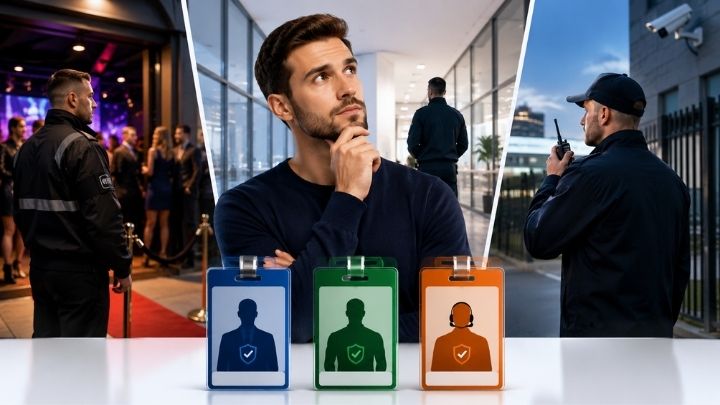
Both are front-line security activities regulated by the Security Industry Authority (SIA), and you need the appropriate license-linked qualification before applying for the relevant license. Current SIA guidance confirms separate qualification routes for door supervision and security guarding.
Choose Door Supervisor Training If You Want To:
- Work in licensed premises, such as pubs, clubs and other venues where door supervision is required.
- Work in nightlife or events, where managing entrances, queues and crowds can be part of the role.
- Deal regularly with members of the public in busy environments.
- Build a career in venue security and potentially keep your options open for security guarding work.
A Door Supervisor license can be particularly useful if you want flexibility. The SIA states that a Door Supervisor license allows the holder to carry out security guarding activities as well as door supervision.
Consider Door Supervisor training if your career goal involves licensed venues or public-facing security work.
Choose Security Guard Training If You Want To:
- Protect commercial or private premises.
- Carry out patrol and monitoring duties.
- Work in environments such as offices, retail premises, warehouses or construction sites.
- Focus primarily on protecting property, premises and site security rather than door supervision.
The SIA has a separate license-linked qualification for security guarding, so make sure the course you choose matches the license required for your intended role.
Which One Should You Choose?
A simple way to decide is to start with the job you want:
Want to work in pubs, clubs, licensed venues or events?
→ Door Supervisor training may be the more suitable route.
Want to focus on premises, site or property security?
→ Security Guard training may be more appropriate.
Want greater flexibility between these types of security work?
→ A Door Supervisor license may offer broader scope because the SIA permits Door Supervisors to undertake security guarding activities.
Before enrolling, check the latest SIA requirements, as licensing and training rules can change. For example, current SIA guidance was updated in August 2026 and sets out the qualifications currently accepted for both license categories
5. SIA Door Supervisor vs Security Guard: Which Is Better?
There is no single answer to whether an SIA Door Supervisor or Security Guard role is better. The right choice depends on the type of work you want, your preferred working environment, your strengths and your long-term career plans. The SIA has separate license-linked qualifications for door supervision and security guarding, so your intended role should be the starting point when choosing SIA Training.
Consider Your Preferred Work Environment
If you enjoy busy, public-facing environments, Door Supervisor training may be a better fit. Door supervisors can work at licensed premises and may deal with queues, customers, access control and security incidents.
If you prefer protecting buildings, sites and property, Security Guard training may suit you better. Security guarding can involve premises such as offices, retail locations, warehouses and construction sites, depending on the employer.
Think About Your Responsibilities
Door supervision can involve more direct interaction with members of the public, particularly in licensed venues and events. Security guarding generally focuses on protecting premises and property, monitoring sites, controlling access and reporting incidents.
The SIA explains that licensing requirements are based on the activity being carried out, rather than simply the job title.
Match the Role to Your Personal Strengths
Consider the type of work you naturally prefer:
- Good communication and confidence with the public: Door Supervisor
- Strong observation and attention to detail: Security Guard
- Comfortable working in busy venues: Door Supervisor
- Prefer structured site patrols and monitoring: Security Guard
- Interested in venue and event security: Door Supervisor
- Interested in property and site security: Security Guard
These are general career considerations rather than guarantees about what a particular job will involve. Duties can vary between employers and workplaces.
Consider Your Preferred Working Hours
Your preferred schedule can also influence your decision. Door supervision is commonly associated with licensed venues and events, where evening, night and weekend work may be part of the job.
Security Guard roles can have a wider variety of working patterns depending on the site. Some positions may involve daytime work, while others operate around the clock and require shift patterns.
Always check the actual job description before accepting a position, because working hours and conditions vary between employers.
Think About Your Long-Term Career Goals
If you want to work in clubs, pubs, licensed venues or events, Door Supervisor training is likely the more relevant place to start.
If you’re interested in site, premises or property security then Security Guard training may be more appropriate.
There is also some flexibility between the two paths. According to the SIA, a holder of a Door Supervisor license can do security guard work, and its current guidance on renewal also allows eligible Door Supervisors to switch to a Security Guard license by completing the appropriate refresher training.
So, Which Is Better?
If you want to work in licensed premises, nightclubs, events or public-facing security work, then choose Door Supervisor training.
If premises, site or property protection is your priority opt for Security Guard training,
There is not a better SIA License than the other. The right choice is whichever one corresponds to the work you actually want to do. Also, SIA requirements can change: the regulator consulted on proposed qualification and prerequisite changes on 28 August 2026, with new license-linked qualifications planned for 2027. Before booking your course, check the latest official SIA guidance.
6. What to Check Before Booking SIA Training in the UK
Choosing the right SIA Training provider is an important step if you plan to apply for an SIA License. Before paying for a course, check that the training matches the security role you want to enter and that the qualification is recognized for SIA licensing.
Check the Correct SIA Qualification
The first thing you do is find out what type of license you will need for the type of work you want to do. The SIA has separate licence-linked qualifications for activities such as Security Guard and Door Supervisor work. The official SIA guidance specifies the training required for each licence category.
Do not select a course just because it has the words “SIA” in the title. Make sure it results in the correct recognized license-linked qualification.
Check the Training Provider
The SIA offers a search tool to help you find approved training providers offering recognized SIA license-linked training courses in the UK. Training providers are approved by the relevant awarding organizations, which develop and award the qualifications recognized by the SIA.
Before enrolling, check:
- The provider’s business name and contact details
- Which awarding organization provides the qualification
- The exact qualification and license category
- Course dates and location
- What is included in the advertised price
- How assessments are conducted
This is especially important because SIA requirements and recognized qualifications can change. In August 2026, for example, the SIA confirmed that its endorsement of BIIAB had ended, demonstrating why learners should verify current information before booking.
Check SIA Eligibility and Application Requirements
Completion of training does not automatically give you a SIA License. The SIA considers licence applications against its existing criteria, which includes identity, qualifications, criminal record and right-to-work requirements.
Please check the latest official requirements before you start your course, especially if you think your personal circumstances may affect your application.
Review Course Duration, Assessments and Total Cost
Do not compare courses on price alone. Ask what the advertised fee includes and check:
- Total course duration
- Qualification and assessment fees
- Any required first-aid training
- Assessment arrangements
- Certification
- Whether additional costs may apply
A transparent provider should be able to explain the full process before you make payment.
Be Careful With Employment Promises
A good SIA Training provider won’t promise that completing a course guaranties you a SIA Licence or a job. Training leads to the qualification required for the appropriate licensing route. The licensing decision is made by the SIA and employment is a matter for individual employers and circumstances.
Beware of promises like “guaranteed SIA license”, “guaranteed job” or unrealistic salary promises.
⚠️ Important: Check Before You Enroll
SIA licensing and training requirements may vary. Before you pay for a SIA Door Supervisor or Security Guard course, check the up-to-date information on the course itself by consulting the official Security Industry Authority (SIA) guidance and their training-provider search tool. Before enrolling, please confirm the qualification, eligibility requirements, course details and the total costs.
Conclusion
Choosing between an SIA Door Supervisor and a Security Guard depends on your career goals and the type of security work you want to do in the UK. Door Supervisor training is ideal for licensed premises, nightlife and events, while Security Guard training is better suited to protecting sites, offices, retail premises and commercial property. Before booking SIA Training, always check the latest SIA requirements and choose the qualification that matches your intended role.